Common myths about vein disease
Misunderstandings about vein disease are widespread. They lead people to delay evaluation, dismiss symptoms that deserve attention, and make decisions based on outdated information. This article addresses the most common myths patients bring to their first consultation, with direct factual corrections.
Myth 1: varicose veins are just a cosmetic problem
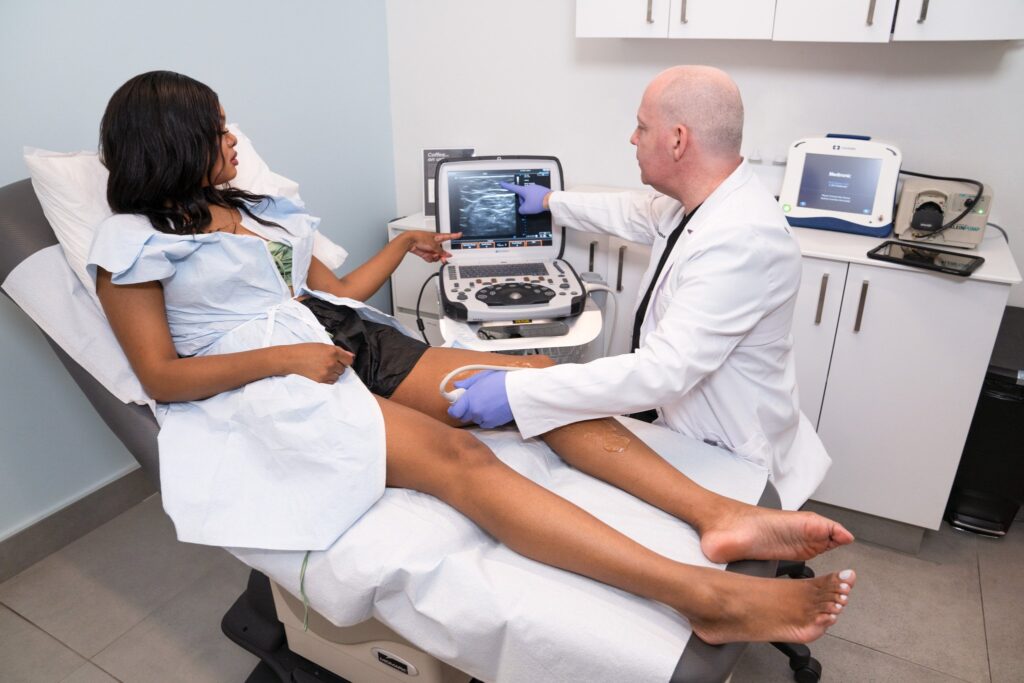
The truth: Varicose veins are a visible sign of venous insufficiency, a condition in which vein valves have failed and blood is pooling in the lower leg. When venous insufficiency is the underlying cause, varicose veins are a medical condition, not a cosmetic one. They produce documented symptoms, they progress over time, and they carry a risk of advancing to more serious stages including skin damage and venous ulcers. The cosmetic-only framing is often applied without the benefit of a duplex ultrasound, which is the only reliable diagnostic tool for determining what is happening inside the vein.
Myth 2: only elderly people get vein disease
The truth: Vein disease affects adults of all ages. Varicose veins and venous insufficiency are common in people in their 30s and 40s, and spider veins can appear in people in their 20s. Family history, pregnancy, and occupational factors are among the strongest predictors. Age-related assumptions cause younger patients to dismiss symptoms they should be evaluating.
Myth 3: vein treatment requires surgery and significant recovery time
The truth: Modern vein treatment is non-surgical. The primary treatments, radiofrequency ablation (RFA) and sclerotherapy, are performed in-office under local anesthesia without incisions. Additional options including endovenous laser treatment (EVLT), ClariVein, and ultrasound-guided procedures are also minimally invasive and in-office. There is no hospital admission and no general anesthesia. Most patients return to normal activities the same day. Read more about why vein treatment is non-surgical.
Myth 4: compression stockings treat vein disease
The truth: Compression stockings manage symptoms but do not treat the underlying condition. When you wear compression stockings, the external pressure reduces venous pooling and alleviates aching and swelling while you are wearing them. When you remove the stockings, the underlying valve failure remains. Compression is a valuable supportive tool during conservative management and after procedures, but it is not a cure for venous insufficiency.
Myth 5: if my veins don't look bad, nothing serious is going on
The truth: The severity of visible vein changes does not reliably reflect the severity of underlying venous insufficiency. Significant reflux can occur in veins that are not visibly prominent on the surface. Patients with relatively minor visible changes can have substantial venous disease on duplex ultrasound. A duplex ultrasound is the only way to determine what is actually happening inside the venous system.
Myth 6: vein treatment leaves visible scars
The truth: Modern minimally invasive vein procedures leave no significant scarring. Sclerotherapy involves a series of small injections using fine needles, with no incisions. Thermal ablation procedures are performed through a small catheter entry point that heals completely. Treated veins fade and are reabsorbed by the body, and the overlying skin returns to its normal appearance.
Myth 7: vein disease only affects people who are overweight
The truth: While excess weight increases venous pressure and is a risk factor for vein disease, vein disease affects people across all body types. Many patients at a healthy weight develop varicose veins or venous insufficiency driven by family history, pregnancy, or occupational factors. Weight is one variable among several, not a prerequisite for vein disease.
If any of these myths have been part of your reasoning for not seeking an evaluation, this is a good time to reconsider. Learn what to expect at your first appointment with our Pennsylvania team. Read our complete guide to varicose veins for more accurate background information.
Myth 8: you need to wait until veins are severe before treating them
The truth: Waiting for vein disease to become severe before seeking treatment is one of the most consequential misunderstandings in vein care. The decision about when treatment is appropriate is not based on how alarming the veins look. It is based on whether venous insufficiency is present and whether it is producing documented symptoms. A patient with C2 varicose veins and daily aching has a clinically appropriate indication for treatment. Waiting until C4 skin changes appear means arriving at a stage where treatment has limited reversibility and more involved recovery. Earlier is consistently better in vein care. The time to seek evaluation is when symptoms are present and consistent, not when they have become severe.
Putting the facts to work
Each of the myths above has a real cost when it goes unchallenged. Patients who believe vein disease is cosmetic delay medical treatment until it progresses. Patients who believe treatment requires surgery avoid evaluation entirely. Patients who believe compression stockings fix the underlying problem accept a management tool as a cure. The corrective is a single evaluation appointment, which replaces assumptions with clinical facts. Our team accepts new patients across Pennsylvania. See what to expect at your first consultation and bring any remaining questions to our team.
Frequently asked questions
Is it true that crossing your legs causes varicose veins?
This is a popular belief but there is no strong clinical evidence that crossing your legs causes varicose veins. Vein disease is primarily driven by genetic factors, hormonal influences, and sustained venous pressure from prolonged standing or sitting. Occasional leg crossing does not meaningfully contribute.
Will varicose veins definitely get worse if I don't treat them?
Vein disease is progressive in most cases, meaning the underlying venous insufficiency tends to worsen over time if the structural cause is not addressed. The rate of progression varies. Some patients progress slowly over many years; others progress more rapidly. There is no reliable way to predict individual progression without periodic monitoring.
Is it true that you have to have tried compression stockings before insurance will cover treatment?
Some insurance plans require documentation of conservative treatment before authorizing ablation procedures. This varies by plan. Our team is familiar with individual plan requirements and will walk you through what is needed. This is a process step, not a permanent barrier.
I've heard vein treatment is very painful. Is that true?
Vein treatment involves minimal discomfort. Procedures are performed under local anesthesia. Most patients describe a mild pressure or warmth sensation during thermal ablation procedures, and a brief stinging during sclerotherapy injections, far less than many patients expect before their first procedure.
What is the most effective treatment for varicose veins today?
Radiofrequency ablation (RFA) and sclerotherapy are the primary minimally invasive treatments for varicose veins. RFA addresses underlying saphenous reflux; sclerotherapy treats residual varicose and spider vein clusters. Endovenous laser treatment (EVLT), ClariVein, and ultrasound-guided procedures are additional options selected based on your specific ultrasound findings and anatomy. The right combination depends on your individual venous map.