Are varicose veins dangerous?
The straightforward answer is: it depends on their stage and severity. Most people with varicose veins have a condition that is uncomfortable and progressive but not immediately dangerous. A smaller number have varicose veins connected to conditions that carry meaningful health risks. Understanding the difference requires an evaluation, not a self-assessment based on how the veins look.
The short answer
Varicose veins are not a medical emergency in the vast majority of cases. They do not typically cause heart attacks or produce sudden life-threatening events. What they do, when left untreated, is progress. Early-stage varicose veins can advance to more significant disease over months and years. The later the stage at which treatment begins, the more involved that treatment becomes.
What varicose veins can cause if untreated
When varicose veins are connected to underlying chronic venous insufficiency (CVI), the elevated venous pressure does not stay static. It compounds over time. Possible complications include:
- Skin changes (lipodermatosclerosis). Sustained high venous pressure causes inflammation and fibrosis in the lower leg skin. The skin becomes discolored, thickened, and increasingly difficult to heal if injured.
- Venous ulcers. In advanced CVI, skin damage reaches the point where even minor trauma produces wounds that do not heal readily. Venous ulcers are slow to heal, prone to infection, and significantly impact quality of life.
- Superficial thrombophlebitis. Varicose veins can develop localized inflammation and blood clots in the vein itself, producing redness, hardness, and tenderness. It is generally not dangerous but is painful and warrants evaluation.
- Bleeding from varicose veins. Varicose veins that have produced thin, fragile skin over them can occasionally bleed with minor trauma.
A framework for risk level
|
Presentation |
Risk level |
Recommended action |
|
Small spider veins, no symptoms, no family history |
Low medical risk |
Evaluation optional; cosmetic treatment available |
|
Varicose veins, mild symptoms (aching, heaviness) |
Low to moderate |
Evaluation recommended; treatment prevents progression |
|
Varicose veins, significant swelling, C3 stage |
Moderate |
Evaluation and treatment advised |
|
Skin changes around ankle, C4 stage |
Moderate to high |
Prompt evaluation; treatment to prevent ulceration |
|
Active venous ulcer, C6 stage |
High |
Urgent evaluation; wound care plus vein treatment |
|
Sudden unilateral severe swelling |
Urgent |
Prompt medical evaluation to rule out DVT |
The role of early evaluation
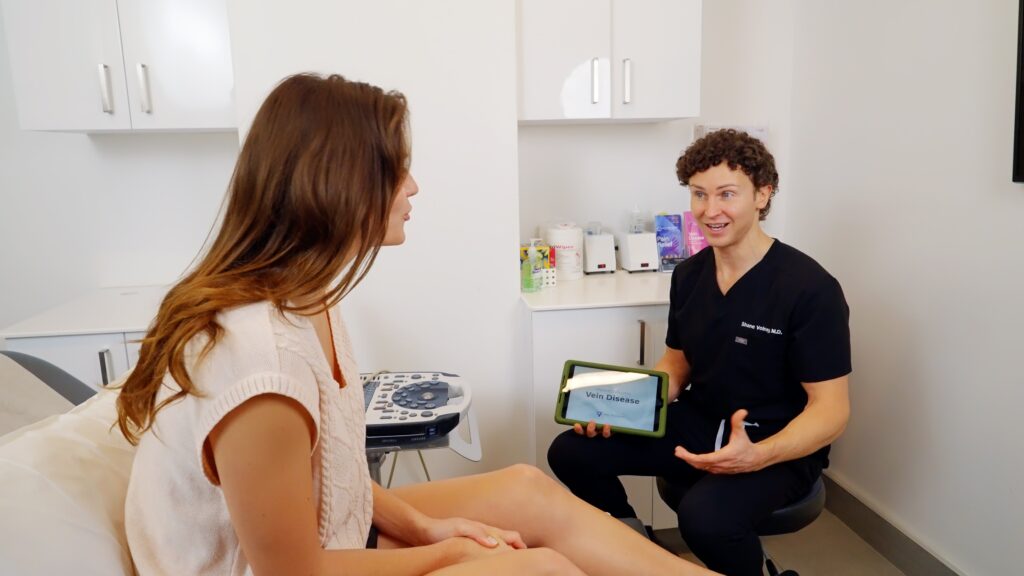
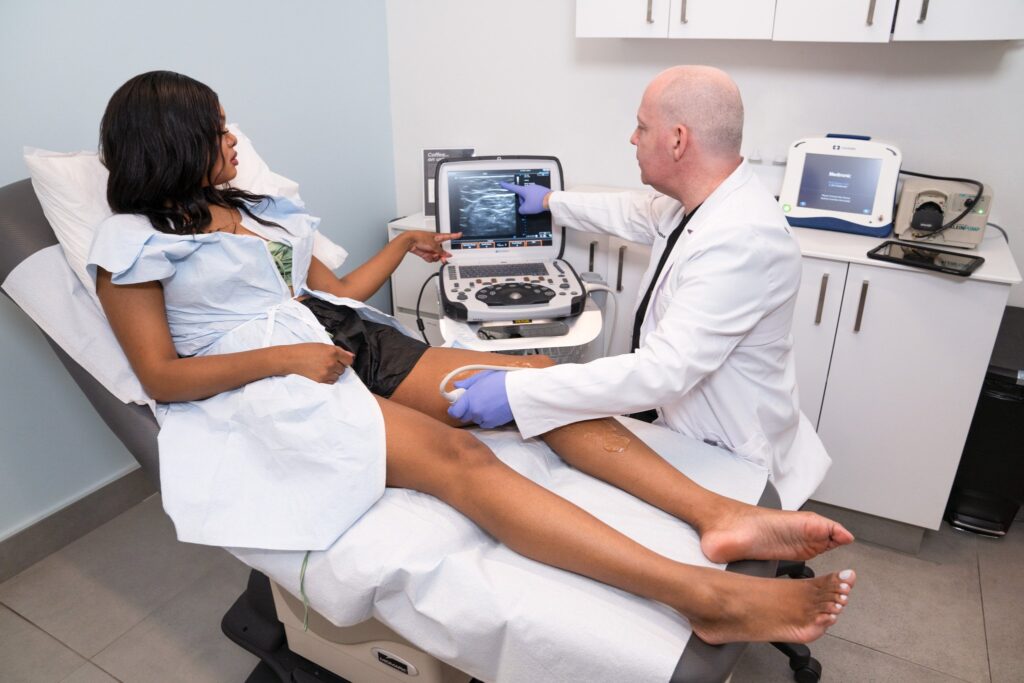
The risk profile of varicose veins cannot be accurately determined from their appearance alone. What looks like a cosmetic annoyance on the surface can be connected to significant underlying venous insufficiency visible only on duplex ultrasound. A duplex ultrasound provides the clinical information needed to place a patient accurately on the risk spectrum and make informed treatment decisions. It is painless and takes place during your first appointment.
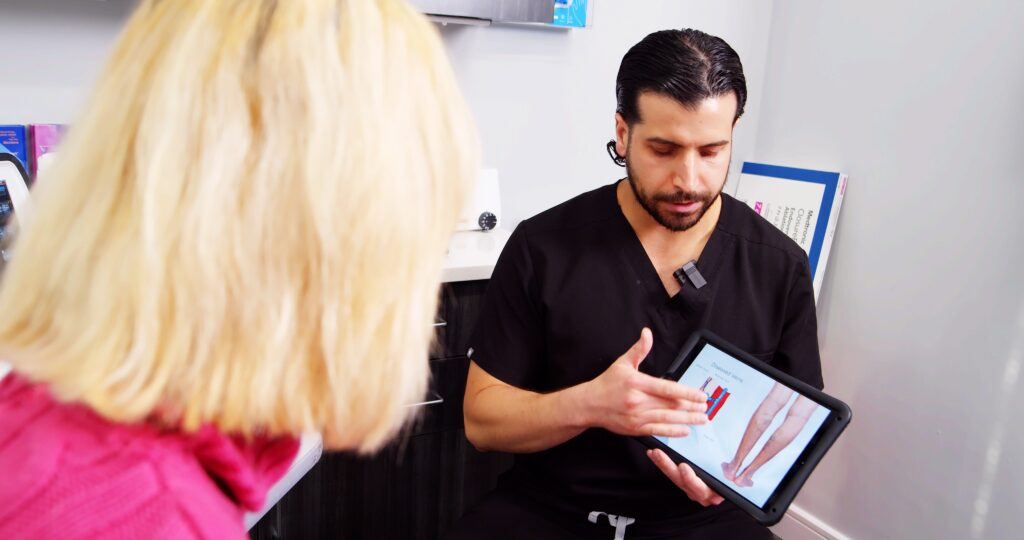
If you have varicose veins and have been wondering whether they are something to take seriously, the answer is yes: they deserve evaluation. Learn what to expect at your first consultation. Read about how vein disease progresses if left untreated and what CVI looks like in detail.
What to do if you notice a sudden change in your legs
Sudden severe swelling, warmth, and pain in one leg developing over hours is a potential medical emergency. Go to the emergency room or urgent care immediately. Do not schedule a vein clinic appointment for these symptoms.
Most varicose vein symptoms are chronic and gradual, but certain sudden changes warrant prompt medical evaluation rather than a routine appointment scheduling. Sudden onset of severe swelling, warmth, and pain in one leg, especially if it develops over hours rather than days, should be evaluated for deep vein thrombosis (DVT). A sudden-onset painful, red, firm cord along the course of a varicose vein may represent superficial thrombophlebitis. These two situations require different responses. Superficial thrombophlebitis (a clot in a surface vein) is typically not dangerous and warrants a same-day or next-day evaluation at our clinic so we can assess the extent and manage it appropriately.
Suspected DVT is different. If you experience sudden severe unilateral leg swelling, warmth, and pain developing over hours, seek prompt medical evaluation (urgent care or an emergency room) rather than scheduling a vein clinic appointment. DVT carries a risk of pulmonary embolism, and timely evaluation with anticoagulation capacity is essential. Do not wait for a vein clinic appointment if DVT symptoms are acute and severe. Our team can support follow-up care once an acute DVT has been evaluated and managed at the appropriate facility.
The relationship between varicose veins and overall leg health
Varicose veins exist within the broader context of your leg vascular health. Patients with significant venous insufficiency should also be aware of the difference between venous and arterial symptoms. Arterial disease (peripheral arterial disease, or PAD) produces a different symptom pattern: cramping or pain during walking that improves with rest, rather than the venous pattern of discomfort at the end of the day that improves with elevation. Our evaluation includes an assessment for arterial risk factors when clinically appropriate, because PAD and venous disease can coexist and because PAD affects both the clinical picture and the safety of certain compression levels.
Taking the next step
The most useful action for anyone with varicose veins is an accurate evaluation that determines where they stand on the risk spectrum. Not every varicose vein requires treatment, and not every patient needs to treat urgently. But every patient with varicose veins deserves to know whether their specific situation is low-risk and stable or whether intervention would meaningfully reduce their risk of complication. A duplex ultrasound during a single appointment gives you that information. Our team accepts new patients across Pennsylvania, and the evaluation is designed to be thorough, efficient, and clear about what the findings mean for your health.
Frequently asked questions
Can varicose veins cause a blood clot?
Superficial thrombophlebitis (a clot in a surface varicose vein) can occur and is painful but typically localized. Patients with significant varicose vein disease also have a somewhat elevated risk of deep vein thrombosis (DVT) in situations of prolonged immobility. A vein evaluation can assess your individual risk level.
What is the difference between a clot in a varicose vein and a DVT?
Superficial thrombophlebitis occurs in veins close to the skin surface and is rarely life-threatening. Deep vein thrombosis (DVT) occurs in the larger deep veins and carries risks including pulmonary embolism. DVT symptoms include sudden severe swelling, warmth, and redness in one leg, warranting prompt medical evaluation.
My varicose veins have been there for years without getting worse. Should I still get them evaluated?
Apparent visual stability over short periods does not mean underlying disease has not progressed. CVI often advances gradually without dramatic visible changes until a more advanced stage is reached. A duplex ultrasound will provide an accurate current picture that a visual assessment cannot.
Can varicose veins affect my ability to exercise?
Many people with varicose veins exercise without difficulty. However, if your legs ache, swell, or feel significantly heavy during or after activity, those symptoms may reflect underlying venous insufficiency that would respond to treatment. After appropriate vein treatment, most patients report meaningful improvement in exercise tolerance and recovery.
When should I go to the emergency room for a vein concern?
Go to the emergency room if you experience sudden severe swelling, warmth, and pain in one leg developing over hours. This pattern can indicate deep vein thrombosis (DVT), which carries a risk of pulmonary embolism. Do not wait for a vein clinic appointment. For superficial thrombophlebitis, a painful firm cord along a surface vein without systemic symptoms, a same-day or next-day clinic evaluation is appropriate rather than emergency care.