Pregnancy and varicose veins
Pregnancy is one of the most consistent triggers for varicose veins in women who have a genetic predisposition to vein disease. For many women, varicose veins first appear or worsen significantly during pregnancy, raising questions about safety, treatment timing, and what will happen after delivery. This article covers the mechanism behind pregnancy-related vein changes, how to manage symptoms during pregnancy, and what treatment options look like after delivery.
Why pregnancy affects veins
Several mechanisms converge during pregnancy to increase the risk of varicose vein formation: blood volume expands substantially, progesterone and relaxin cause smooth muscle relaxation in vein walls, the growing uterus increases backpressure in the leg veins, and physical activity often decreases as pregnancy advances, reducing calf muscle pump action. Together, these factors create an environment in which weakened vein valves are likely to fail. Women who already have a genetic predisposition are most susceptible. First pregnancies tend to produce the most significant vein changes; subsequent pregnancies often worsen pre-existing disease. Read our complete guide to varicose veins.
What to expect during pregnancy
Varicose veins that develop during pregnancy may not become fully visible until the second or third trimester. Symptoms typically include leg aching, heaviness, swelling in the lower legs and ankles, and visible bulging veins on the thigh, calf, or behind the knee. Symptom severity often worsens as the day progresses and as the pregnancy advances, and may improve temporarily after sleeping or resting with legs elevated.
Managing vein symptoms during pregnancy
Vein treatment with ablation or sclerotherapy is generally not performed during pregnancy. Management focuses on reducing symptoms and slowing further progression:
- Graduated compression stockings. Medical-grade compression stockings reduce blood pooling in the lower leg and are the primary management tool for varicose vein symptoms during pregnancy.
- Regular movement. Walking activates the calf muscle pump. Avoid prolonged sitting or standing without movement breaks.
- Leg elevation. Elevating the legs when resting, particularly above the level of the heart, reduces venous pressure and helps relieve swelling.
- Left lateral sleeping position. Sleeping on the left side reduces uterine pressure on the inferior vena cava and improves venous return.
After delivery: timing treatment
Most pregnancy-related vein changes improve in the first three to six months after delivery, but veins that have undergone significant valve damage often do not fully resolve without treatment. Waiting three to six months, and until breastfeeding is complete, allows natural resolution before deciding what intervention is needed.
The trajectory varies significantly by patient. Some varicose veins retract almost completely as hormone levels normalize and blood volume returns to baseline. Others persist because valve tissue was permanently damaged during pregnancy. Most vein specialists recommend the three-to-six-month waiting period specifically to distinguish between these two outcomes before proceeding to treatment.
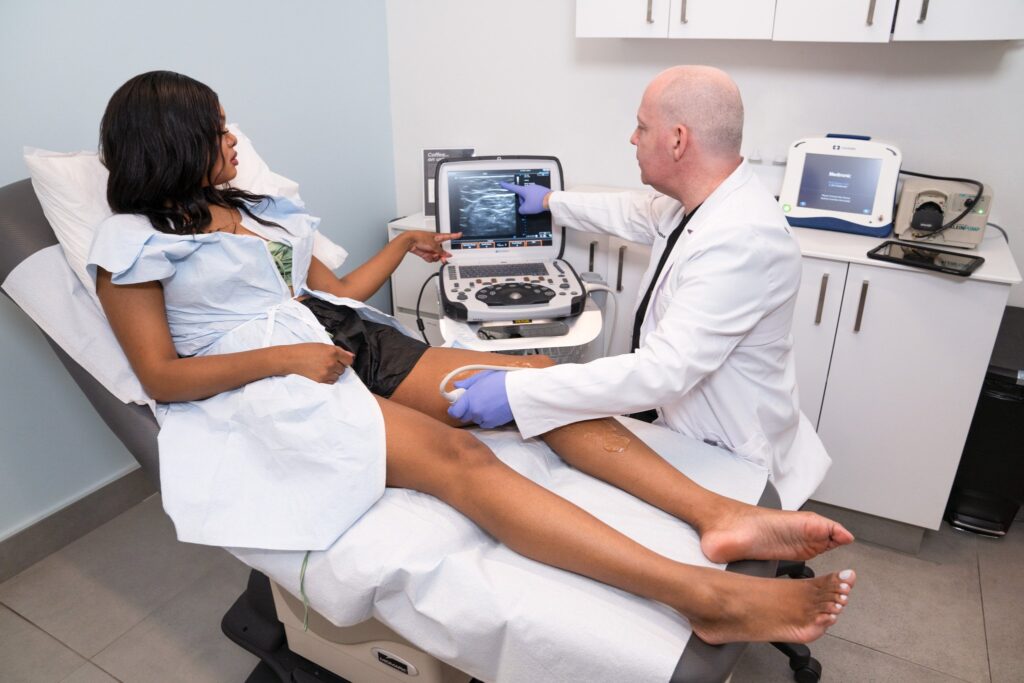
After that waiting period, a duplex ultrasound provides a clear picture of which veins remain problematic. Veins that remain significantly enlarged or symptomatic after the resolution period are unlikely to improve further without intervention. Review the symptoms that warrant a post-delivery evaluation.
Long-term follow-up after treatment
For women treated after delivery, follow-up appointments are scheduled at 1, 3, 6, and 12 months after treatment to confirm treated vein closure and monitor for any new disease. Women who plan future pregnancies should be aware that subsequent pregnancies carry a risk of new or worsening vein disease and may require re-evaluation after each delivery.
If you are postpartum and have been living with varicose veins since your pregnancy, our Pennsylvania team can evaluate your veins and develop a treatment plan. Learn what to expect at your first consultation. Read about chronic venous insufficiency, which is often the underlying condition driving pregnancy-related varicose veins. Learn more about compression stockings during pregnancy.
Vulvar varicosities during pregnancy
Vulvar varicosities are varicose veins in the vulva or surrounding pelvic area that develop during pregnancy due to the same pressure and hormonal mechanisms affecting leg veins. They cause discomfort, heaviness, and visible bulging in the affected area and are often most significant in the third trimester. While distressing, vulvar varicosities typically resolve significantly after delivery once the uterine pressure and elevated blood volume normalize. Specific treatment is rarely needed and is generally deferred until after delivery when the extent of residual disease can be accurately assessed. Supportive garments and positioning are the primary management approaches during pregnancy.
When to start the post-delivery evaluation
The right time to schedule a post-delivery vein evaluation depends on several factors: the severity of symptoms and visible changes that remain after the natural resolution period, whether you are breastfeeding (which maintains some hormonal influence on vein wall tone), and how much time has passed since delivery. Most vein specialists recommend waiting at least three to six months and until breastfeeding is complete before initiating treatment. If your symptoms remain significantly bothersome at that point, a duplex ultrasound will give you a clear current picture of what is present and what treatment is appropriate.
Planning ahead: vein care before and between pregnancies
Women who know they have a family history of vein disease or who have already developed varicose veins during a prior pregnancy can take proactive steps. A baseline duplex ultrasound evaluation before a planned pregnancy documents the current state of vein health. This baseline makes it easier to assess any worsening that occurs during pregnancy and guides post-delivery treatment decisions. Between pregnancies, completing treatment for existing venous insufficiency and maintaining compression stocking use during subsequent pregnancies reduces the cumulative burden of progressive vein disease over a woman's reproductive years. Our team is experienced in coordinating care around family planning and can discuss timing considerations at your evaluation.
Frequently asked questions
Will my varicose veins go away on their own after delivery?
Some pregnancy-related veins improve significantly in the months after delivery, particularly smaller visible surface veins. However, veins that have undergone significant structural stretching and valve damage often do not fully resolve. Waiting three to six months after delivery gives natural resolution time before evaluation determines what remains.
Can varicose veins during pregnancy harm my baby?
Superficial varicose veins in the legs do not affect fetal development or blood supply to the baby. They are a maternal comfort issue, not a fetal safety issue.
Can I wear compression stockings safely during pregnancy?
Yes. Medical-grade graduated compression stockings are safe and recommended during pregnancy for managing varicose vein symptoms and reducing lower leg swelling. Maternity-specific styles are available that accommodate a growing abdomen.
If I treat my varicose veins before a future pregnancy, will they come back?
Treatment closes the specific veins addressed. However, a future pregnancy creates the same hormonal and pressure conditions that originally caused the problem, and new veins can develop. Women treated before a subsequent pregnancy are advised to begin wearing compression stockings early in the next pregnancy and to seek re-evaluation after delivery if needed.
Is it safe to treat varicose veins between pregnancies?
Yes. Treating venous insufficiency between pregnancies is appropriate and often advisable. A baseline duplex ultrasound before a subsequent pregnancy documents your current vein health, and addressing existing reflux between pregnancies reduces the cumulative burden of vein disease over time. Your specialist can advise on timing relative to your family planning.