Varicose veins: causes, symptoms, and treatment options
Varicose veins are enlarged, twisted superficial veins that develop when the one-way valves inside leg veins stop working properly, allowing blood to pool under increased pressure. They most often appear on the legs and thighs as raised blue, purple, or rope-like bulges. For some patients they are mainly cosmetic. For others, they cause aching, heaviness, swelling, or skin changes and reflect an underlying condition called chronic venous insufficiency.
This guide covers what varicose veins are, why they develop, when they are medical rather than cosmetic, how they are diagnosed with duplex ultrasound, and what modern minimally invasive treatment looks like.
What are varicose veins?
Varicose veins are dilated superficial veins, most often caused by venous reflux, the backward flow of blood through failed valves in the leg. They are most commonly linked to reflux in the great or small saphenous vein, though tributary and perforator veins can also be involved.
One-way valves inside leg veins normally open to let blood travel upward toward the heart and close to prevent backflow. When those valves fail, blood pools in the lower leg. Elevated venous pressure then stretches and distorts the vein wall over time, producing the visible bulges patients recognize as varicose veins.
Varicose veins are distinct from spider veins (small web-like vessels close to the skin surface) and reticular veins (medium-sized blue-green veins just below the surface). All three can fall within the spectrum of chronic venous disease, but they differ in size, depth, appearance, and clinical significance. In some patients they are associated with underlying venous reflux, which is why an evaluation matters when symptoms are present.
Why do varicose veins develop?
Varicose veins develop through a combination of genetic predisposition, weakened vein walls, and sustained venous pressure that overwhelms valve function. Prevalence increases steadily with each decade of adult life, and varicose veins are not exclusively an older person's condition. Many patients in their 30s and 40s seek evaluation.
Key risk factors include:
- Family history. A genetic tendency toward weak vein valves is one of the most important risk factors.
- Prolonged sitting or standing. Routines that keep blood pooled in the lower legs for hours put sustained pressure on vein walls.
- Increased blood volume, hormonal changes, and pressure from a growing uterus raise demand on the venous system.
- Vein walls and valve tissue naturally weaken over decades.
- Body weight. Excess weight increases venous pressure in the legs.
- Sex and hormones. Varicose veins are more common in women, and hormonal shifts during pregnancy, menopause, or hormonal contraception can contribute.
- Prior deep vein thrombosis or leg injury. DVT and other trauma can damage vein structures and disrupt normal flow.
What symptoms do varicose veins cause?
Not all varicose veins are purely visible. Many patients experience symptoms before they notice the veins themselves. Common symptoms include aching, heaviness, swelling, burning, itching, throbbing, and restlessness in the legs, often worse at the end of the day or after prolonged standing.
- Aching or throbbing after long periods of standing
- Heavy or tired legs by the end of the day
- Swelling in the lower leg or ankle
- Burning or itching around the affected veins
- Skin discoloration or thickening around the ankle or lower leg
- Restless or uncomfortable legs at night
If these symptoms sound familiar, book a consultation with our team to have your veins evaluated.
When should you see a vein specialist?
See a vein specialist when varicose veins cause symptoms, when the veins are getting larger, or when you notice skin changes, chronic swelling, or a healed or open ulcer near the ankle.
Sudden severe calf swelling and pain can indicate deep vein thrombosis (DVT), which is a medical emergency. Go to the emergency room. Do not wait for a scheduled appointment. For all other concerns, a vein specialist evaluation with duplex ultrasound is the appropriate next step.
Cosmetic vs medical varicose veins
Varicose veins are considered medical when they cause symptoms or reflect underlying venous reflux on duplex ultrasound. They are considered cosmetic when the visible change exists without symptoms or functional venous disease.
The distinction matters for two reasons. First, medically necessary treatment is typically covered by insurance, while cosmetic treatment is not. Second, treating only the surface appearance without addressing underlying reflux tends to produce incomplete results and a higher rate of recurrence. Duplex ultrasound, not visible appearance alone, is the deciding factor.
How are varicose veins diagnosed?
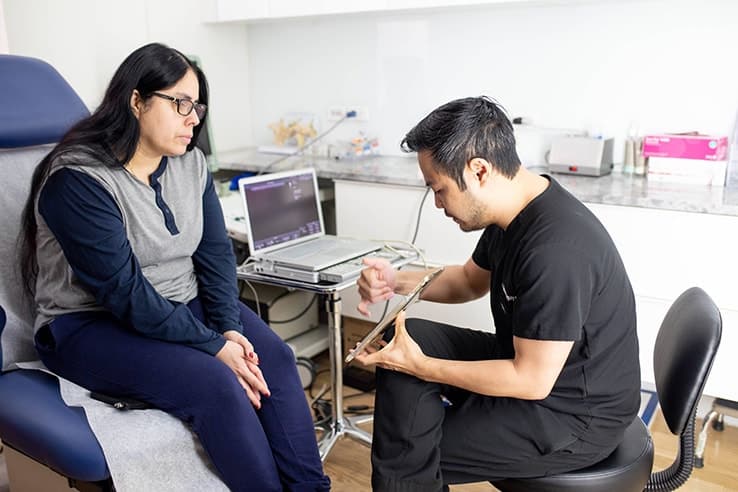
Varicose veins are diagnosed with a clinical exam and a duplex ultrasound, a painless imaging test that maps blood flow through the leg veins and identifies where valves are failing. The test uses sound waves, not radiation.
Duplex ultrasound maps flow through the great saphenous, small saphenous, tributary, and perforator veins. In many cases the ultrasound gives the clinical team enough information at the first visit to explain whether reflux is present and which treatment options may be appropriate. When varicose veins reflect chronic venous insufficiency, clinicians describe severity using the CEAP classification (C0 through C6). Book a consultation to have your veins mapped with duplex ultrasound.
What are the treatment options for varicose veins?
Modern varicose vein treatment is minimally invasive, performed in the office under local anesthesia, and matched to the patient's ultrasound findings, symptoms, and anatomy. There is no hospital stay, no general anesthesia, and no surgical incision. Most patients return to normal activities the same day.
The primary minimally invasive treatments are:
- Radiofrequency ablation (RFA). A thin catheter delivers radiofrequency energy inside the failing vein, causing it to close. Used when an underlying source of reflux (often in the great or small saphenous vein) needs to be addressed.
- Sclerotherapy. A medical solution is injected into smaller varicose or spider veins, causing them to close and gradually fade. Often used after underlying reflux has been treated.
Other minimally invasive options that may be part of your plan depending on your ultrasound findings and anatomy include endovenous laser treatment (EVLT), ClariVein, and ultrasound-guided procedures for deeper or non-visible refluxing veins.
Our team follows the VeinVanish™ methodology, a personalized treatment-planning approach that matches the right minimally invasive procedure to each patient's ultrasound findings, symptoms, and goals rather than a one-size-fits-all protocol.
Does insurance cover varicose vein treatment?
Most major insurance plans in Pennsylvania cover varicose vein treatment when medical necessity is documented, meaning both a record of symptoms and duplex ultrasound findings confirming venous reflux.
Documentation requirements vary by plan, and some plans require a period of conservative treatment (compression therapy and activity modification) before authorizing procedures. Our team handles insurance verification and prior authorization.
What happens if varicose veins are left untreated?
Untreated varicose veins tend to worsen over time rather than resolve, and advanced vein disease can progress to skin changes, chronic swelling, superficial phlebitis, or venous ulcers.
Not every case progresses at the same rate, and some patients live with stable varicose veins for years. But because chronic venous disease is progressive at the population level, early evaluation gives you the widest range of options. Our team accepts new patients at clinics across Pennsylvania. Book a consultation to have your veins evaluated and get a clear picture of what is happening.
Frequently asked questions
Are varicose veins dangerous?
Varicose veins themselves are rarely dangerous, but they can indicate underlying venous reflux, and advanced cases can lead to skin changes, superficial phlebitis, or venous ulcers. Sudden severe calf swelling and pain can indicate deep vein thrombosis, which is a medical emergency.
Are varicose veins a sign of poor circulation?
Varicose veins reflect impaired venous return in the legs, not arterial or overall circulation problems. The valves that normally keep blood flowing upward have failed, allowing blood to pool in the lower leg.
Can varicose veins cause leg swelling?
Yes. Elevated venous pressure from failing valves can cause fluid to leak into surrounding tissue, producing swelling in the lower leg or ankle that is typically worse at the end of the day.
Can varicose veins cause restless legs?
In a meaningful portion of patients, symptoms of restless legs syndrome are linked to underlying venous insufficiency, and treating the vein problem can substantially relieve them. If restless legs have been keeping you up at night, book a consultation so we can check for a venous cause.
Can varicose veins go away on their own?
Varicose veins do not resolve on their own. Once vein valves fail, the structural change is permanent without treatment. Compression stockings and activity can reduce symptoms but do not close the affected veins.
Do varicose veins come back after treatment?
Treated veins are intended to close and stop carrying abnormal blood flow. However, recanalization, incomplete closure, previously untreated tributaries, or new reflux can develop over time. Follow-up appointments at 1, 3, 6, and 12 months help monitor for new changes and address them early.